Doctors Are Letting AI Diagnose Now — Quietly
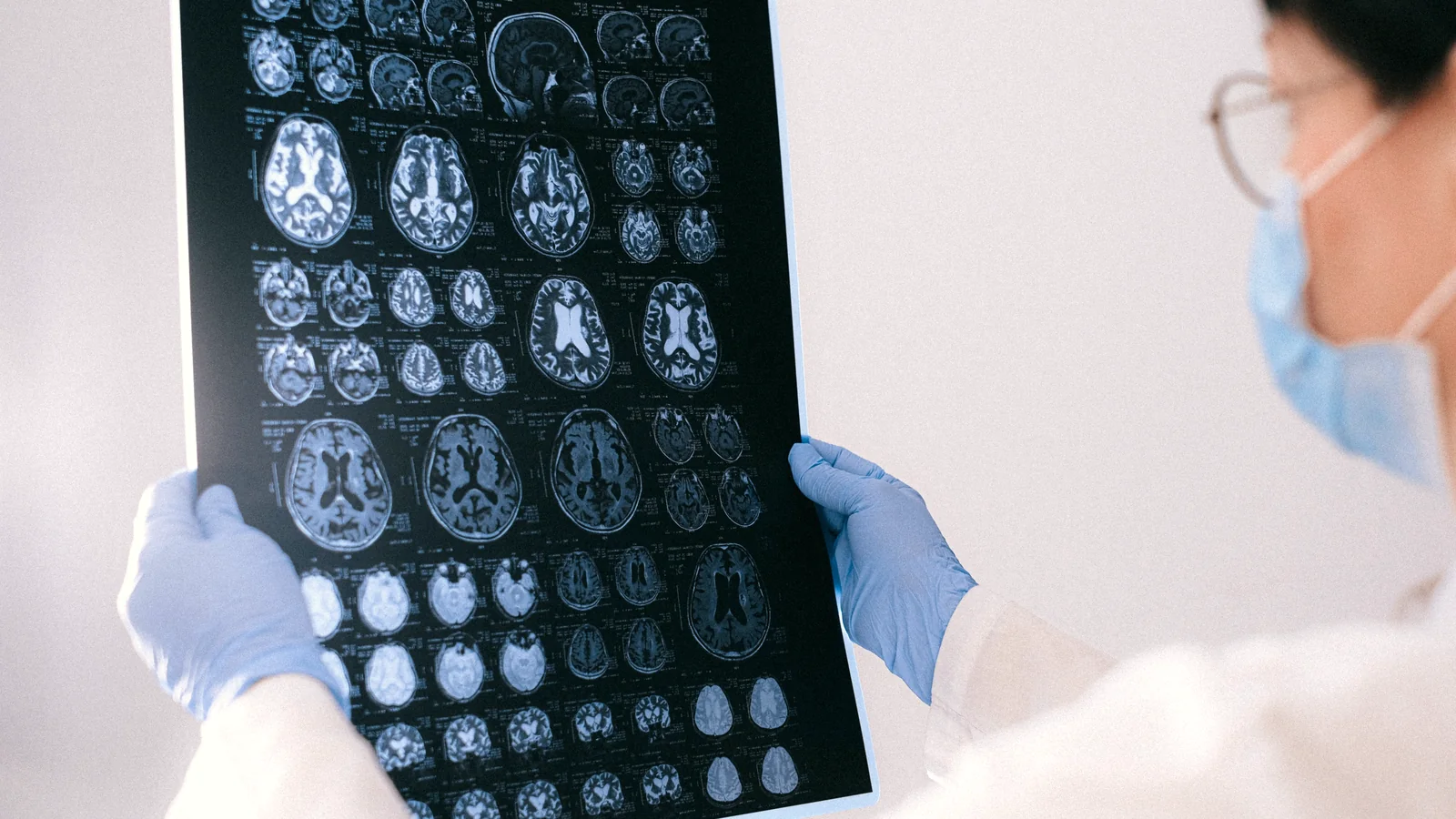
A narrow class of tools can now flag certain conditions without a clinician reviewing the case first. The real story is not accuracy. It is access.
The short version
- A class of AI diagnostic tools has been approved to flag certain conditions on their own — without a doctor reviewing every case first.
- The approved list is deliberately narrow: eye scans for diabetic retinopathy, early-stage skin conditions. Pattern-matching on images, where the answer is visible.
- This is not AI replacing doctors. It is AI replacing the queue.
Medical AI has spent a decade as an assistant. It highlighted a region of a scan, offered a second opinion, sorted a worklist — and a human signed off on everything. That sign-off was the line, and it had not moved.
It has now moved. A class of autonomous diagnostic tools has received approval for specific uses, including independently flagging certain cases of diabetic retinopathy and some early-stage skin conditions. Independently means the software reaches a conclusion without a clinician reviewing that case first.
It is a small change on paper and a large one in practice, and it is worth understanding precisely, because both the excitement and the alarm around it are mostly aimed at the wrong thing.
Why these conditions, and not others
Look at what got approved and a pattern appears immediately. Both are image problems. Both have a visible, well-defined answer. Both have decades of labelled examples. And crucially, both are conditions where the cost of catching them late is severe and the cost of a false alarm is a follow-up appointment.
Diabetic retinopathy is the clearest case. It is a leading cause of preventable blindness. It is detected by photographing the back of the eye. It progresses silently, so people do not seek help until damage is done. And screening everyone who should be screened requires more trained eyes than exist.
That last point is the actual problem being solved. Not accuracy — access.
The bottleneck in screening was never the diagnosis. It was that most people never got screened at all.
What this does not mean
It does not mean an app can tell you what is wrong with you. Consumer symptom-checkers are not what got approved, and the gap between a regulated device used in a clinical setting and a phone app is enormous.
It does not mean autonomous AI for complex diagnosis. Nothing here touches conditions requiring history, examination, judgement or the patient’s own account of what changed. Those remain firmly human, and the approval says so by omission.
And it does not mean fewer doctors. A screening tool that finds more disease creates more work downstream, not less — every flagged case still needs a person to treat it.
The part worth watching carefully
Autonomy raises a question the assistive era never had to answer: when the software is wrong, who is responsible?
There are reasonable answers — the manufacturer, the clinic that deployed it, the regulator that approved it — but they need to be settled explicitly rather than discovered during a lawsuit. Systems that quietly shift risk onto the patient are the failure mode to watch for.
The second thing to watch is performance across populations. A model trained mostly on one group can be measurably worse on another, and skin conditions are the textbook example: tools trained predominantly on lighter skin have historically underperformed on darker skin. Approval should mean this was tested. It is a fair question to ask of any specific tool.
Why this matters more in India than in London
India has an enormous diabetic population and nowhere near enough ophthalmologists to screen it, particularly outside major cities. The distances involved mean a screening appointment can cost a day’s wages before anyone looks at your eyes.
A camera at a district clinic, staffed by a technician, that can flag who needs a specialist and who does not, is not a marginal improvement in that context. It is the difference between screening happening and not happening.
That is the real story of autonomous diagnostics, and it is unglamorous: the benefit lands hardest where the specialist was never available in the first place.
What to do with this information
If you are diabetic, or have a family history, get your eyes screened — the technology only helps people who show up. If a clinic offers AI-assisted screening, it is reasonable to ask what the tool is approved for and what happens with a positive result.
And treat any consumer app claiming to diagnose with the scepticism it has earned. The approved tools got there through years of trials. The app on the store did not.
What this means for you
- Screening just got cheaper and closer for a few specific conditions. If you are in a risk group, use it.
- Ask what the tool is approved for. Autonomous for one condition does not mean trustworthy for another.
- Do not confuse a regulated device with a phone app. Only one of them has been tested on people like you.