The Gummy Aesthetic: Why 2026 Went Soft, Squishy and Loud
Jelly blush, bendy phone cases, rubberised nails — and, running the exact opposite way, sculpted-shoulder 80s maximalism. Both are the trend. That is the point.
The short version
- 2026’s defining look is soft, translucent and squishy: bendy phone cases, jelly blush, rubberised nails. Searches for “gummy bears aesthetic” are up around 50%, “jelly blush” around 130%.
- Running directly against it is “Glamoratti” maximalism — sculpted shoulders, chunky jewellery, “80s luxury” searches up around 225%.
- Two opposite trends at once is not a contradiction. It is what happens when the algorithm stops enforcing one taste.
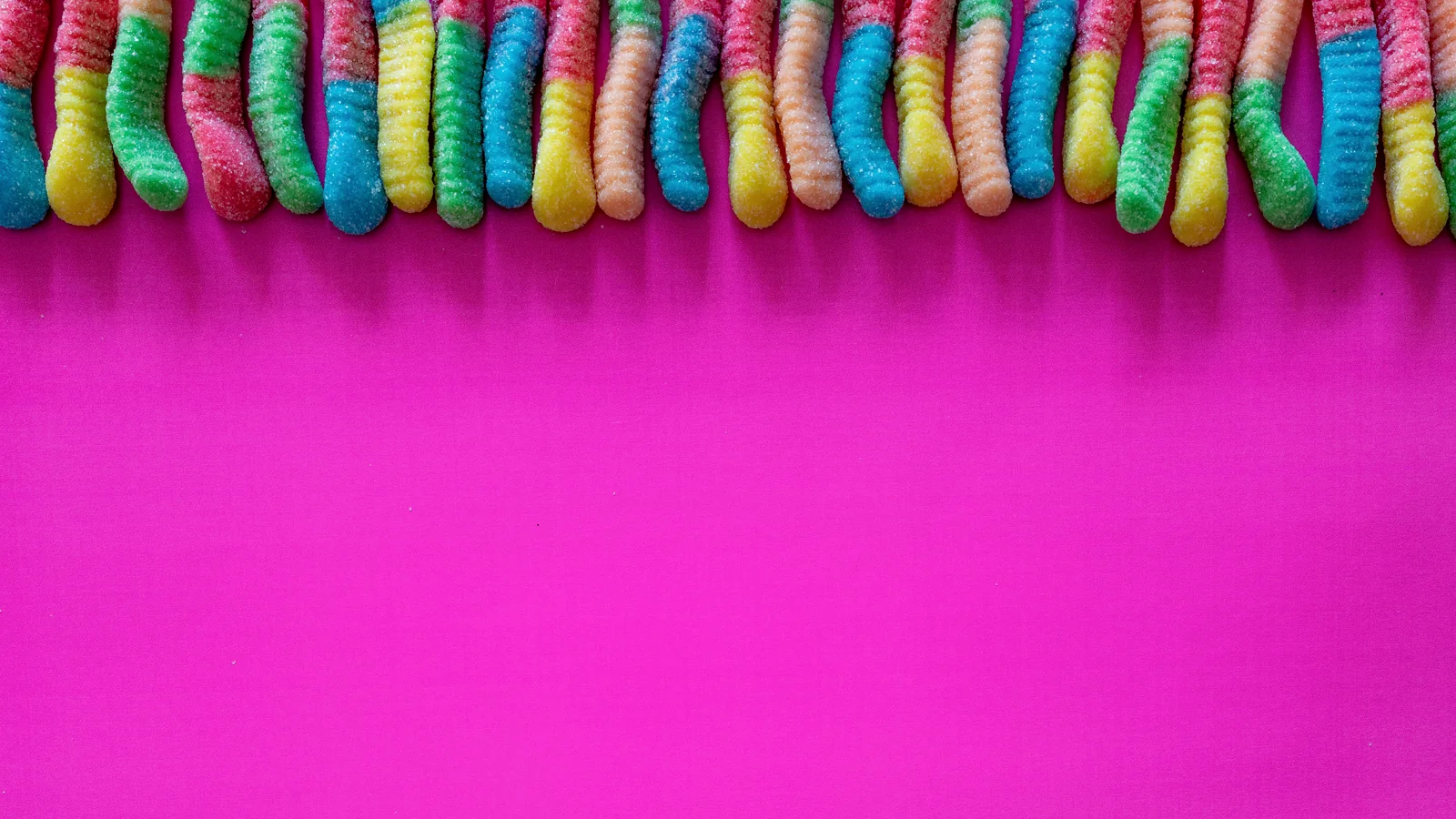
Every year gets a texture, and 2026’s is gummy. Translucent, slightly wobbly, faintly sticky-looking. It shows up as bendy phone cases, elastic cheek tints, rubberised nail art, jelly sandals, and objects that appear to be made of a sweet.
The search data is unusually clear for something this silly. “Gummy bears aesthetic” is up roughly 50%. “Jelly blush” is up around 130%. It has moved from a niche look to a shelf in a shop.
Why soft, and why now
Aesthetics tend to be a reaction to whatever came immediately before, and what came before was hard: minimalism, matte black, brushed metal, sans-serif everything, surfaces designed to look expensive and untouchable.
Gummy is the opposite of untouchable. It looks like it would give slightly if you pressed it. It is playful, cheap-looking on purpose, and impossible to take too seriously.
There is also a fairly obvious reason why softness appeals in a year of AI anxiety, cost-of-living pressure and general institutional wobble. When the news is hard, people reach for objects that feel like a stress toy. This is not deep. It does not need to be.
Hard years produce soft objects. It happens almost every time.
The other trend, running the opposite way
At the same time, “Glamoratti” maximalism is climbing — tailored suits with sculpted shoulders, chunky jewellery, unapologetic excess. Searches for “80s luxury” are up around 225%, a bigger jump than anything on the gummy side.
So the two loudest looks of the year are squishy translucent playfulness and structured expensive drama. They share no colours, no materials and no mood.
This used to be strange. A decade ago a trend was singular because distribution was singular — a handful of magazines, a handful of shows, one look declared correct. Everyone got the same instruction.
Now distribution is personalised. Your feed and mine can run entirely different aesthetics with no overlap, both convinced they are the trend. Neither of us is wrong; we are just being served different rooms of the same building.
What this means if you make things
The practical implication is not “pick the right trend”. It is that picking one is now optional, and picking one badly is worse than picking none.
Coherence beats currency. A product that fully commits to one look reads as confident. A product that adds a fashionable texture on top of an unrelated design reads as a costume, and audiences spot that instantly.
Trend-chasing has a shelf life problem. Physical products take months to make; a look this specific may be tired by the time yours ships. The version that survives is when the trend suits the object anyway — a phone case genuinely benefits from being soft and grippy, so gummy phone cases will outlive gummy everything else.
Borrow the mechanic, not the surface. The reason gummy works is that it invites touch and refuses to take itself seriously. Those two qualities transfer to almost anything. The literal translucent-jelly finish transfers to much less.
How to tell if a trend has legs
A quick test that works surprisingly often. Ask whether the trend makes the object better at its job.
Soft phone case: better grip, better drop protection, more pleasant to hold. It has legs.
Jelly-look shoe with no support: worse at being a shoe. One summer, then gone.
Everything that lasted from a past aesthetic passed this test. Everything that became embarrassing failed it.
The honest position
You do not have to participate. That is the actual freedom in a fragmented trend landscape, and it is worth saying plainly, because trend coverage is usually written to make you feel late.
Trends are options now, not instructions. Take the one that suits you, ignore the rest, and notice that the people who look best are almost never the ones wearing this month’s search term.
What this means for you
- Two opposite trends can both be real. Your feed is a room, not the whole building — stop assuming it is the consensus.
- If you make products, commit fully or not at all. A trend applied as a surface layer reads as a costume.
- Use the test: does the trend make the object better at its job? If yes, it lasts. If no, enjoy it for a season and expect nothing more.