The World Pivots to New Delhi: Unpacking the Geopolitical Shifts at the 18th BRICS Summit
The global world order is undergoing a seismic shift, and if you want to see where the tectonic plates are moving, look no further than New Delhi this…
The global world order is undergoing a seismic shift, and if you want to see where the tectonic plates are moving, look no further than New Delhi this week. On September 12 and 13, 2026, India is rolling out the red carpet at the iconic Bharat Mandapam to host the 18th BRICS Leaders’ Summit.
As a geopolitical analyst, I watch dozens of summits every year, but this one is different. It is not just a ceremonial handshake photo-op. With an expanded 11-member bloc and the world grappling with interconnected crises, this summit is shaping up to be a defining moment for the Global South.
Here is a deep dive into the major global geopolitical developments unfolding right now at the 18th BRICS Summit in New Delhi.
Source: https://whispersinthecorridors.in
The New Shape of BRICS: Bigger and Bolder
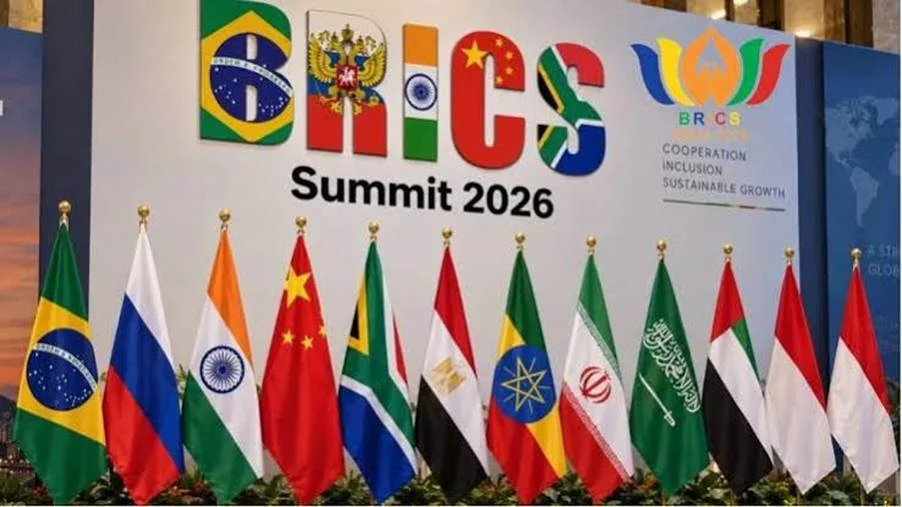
When India last hosted BRICS in 2021, it was a virtual affair with the original five nations. Fast forward to today, and the bloc has more than doubled in size. The 11 full members—Brazil, Russia, India, China, South Africa, Egypt, Ethiopia, Indonesia, Iran, Saudi Arabia, and the United Arab Emirates—now represent a massive chunk of the global population and economic output.
Under India’s 2026 Chairship, the overarching theme is “Building for Resilience, Innovation, Cooperation and Sustainability”. But behind the diplomatic phrasing lies a robust agenda aimed at challenging Western economic dominance and addressing critical vulnerabilities in global supply chains.
The Power Players: Who is in New Delhi?
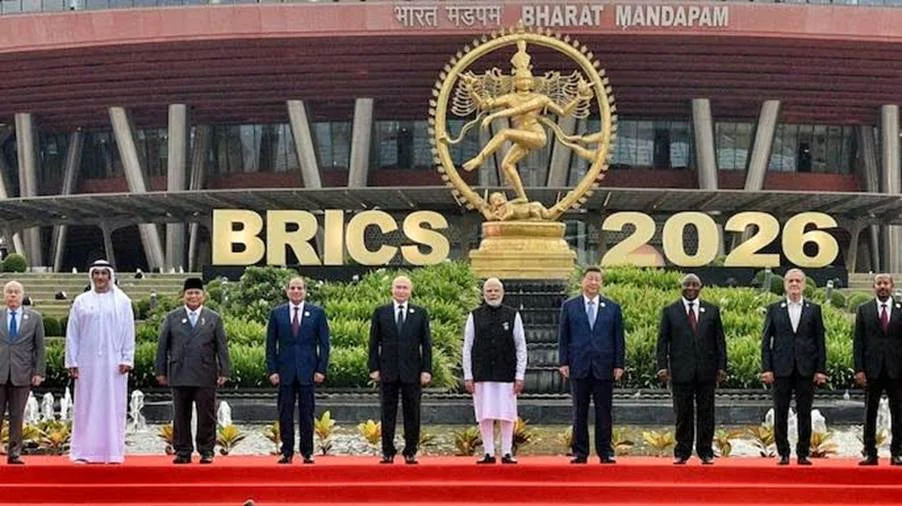
The guest list in New Delhi is a who’s who of global disruptors and power brokers. Prime Minister Narendra Modi is hosting several high-stakes bilateral meetings on the sidelines of the summit:
The Dragon Returns: The most buzzed-about development is the arrival of Chinese President Xi Jinping. This marks Xi’s first visit to India in seven years, bringing a massive delegation of roughly 400 officials. His bilateral meeting with PM Modi on Saturday evening is heavily anticipated, as the two leaders are expected to review the volatile situation along the Line of Actual Control (LAC) and explore steps to normalize trade and bilateral ties.
The Russian Pivot: Russian President Vladimir Putin was the first major world leader to arrive, landing early on September 11. In the shadow of the ongoing Russia-Ukraine war, his talks with Modi focus heavily on energy security and defense cooperation.
Middle Eastern Diplomacy: With the Middle East conflict continuing to escalate, the presence of Iranian President Masoud Pezeshkian adds another layer of geopolitical intrigue.
Note: Brazilian President Luiz Inácio Lula da Silva is the only major absentee among the founding nations, choosing to stay back due to upcoming domestic elections. However, heavyweights like South African President Cyril Ramaphosa and UN Secretary-General Antonio Guterres are in attendance to lend global institutional weight to the proceedings.
The Geopolitical Agenda: What’s Actually on the Table?
While the summit will conclude with the “New Delhi Declaration,” the real action is happening behind closed doors. Here are the major geopolitical developments dominating the discussions:
1. The De-dollarization Drive and Financial Architecture
BRICS has long flirted with the idea of reducing reliance on the US Dollar. In New Delhi, leaders are accelerating discussions on cross-border payments, the greater use of national currencies for trade, and the expansion of the New Development Bank (NDB). With US tariff policies creating wider changes in global trade, BRICS nations are aggressively pursuing financial multilateralism to insulate themselves from Western sanctions and economic leverage.
2. Regional Conflicts and Energy Corridors
You cannot gather this specific group of nations without addressing the elephants in the room. The Russia-Ukraine war, the cascading crises in the Middle East, and growing concerns over the Strait of Hormuz are central to the talks. Because BRICS includes major oil producers (Russia, Saudi Arabia, UAE, Iran) and massive energy consumers (India, China), securing energy routes and supply chains is a top priority for the bloc.
3. The Technology and AI Race
Beyond traditional borders, the geopolitical battlefield has shifted to technology. A massive Chinese business delegation, featuring top executives from tech giants like Huawei and Alibaba, is in town to participate in the BRICS Business Forum. The summit’s agenda places a heavy emphasis on digital trade, artificial intelligence, and securing critical supply chains, signaling that BRICS wants to set its own technological standards independent of the West.
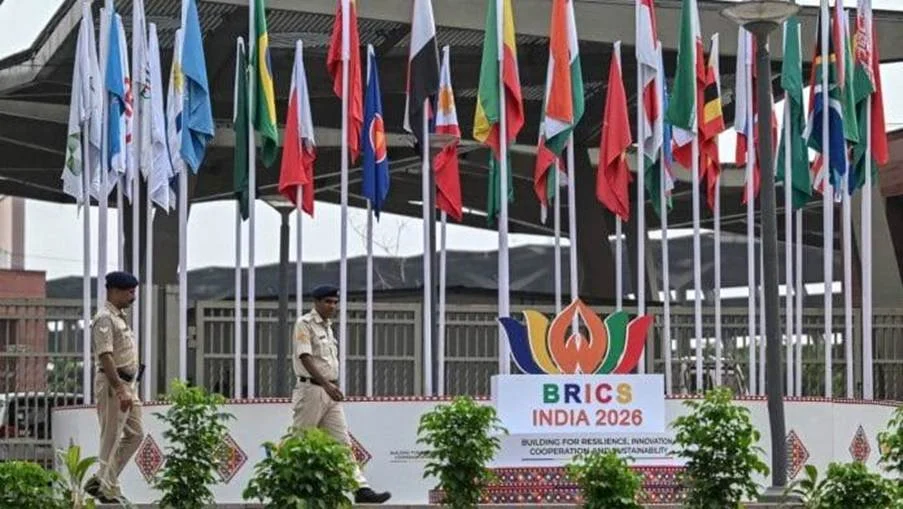
The 18th BRICS Summit in New Delhi is proving that the global center of gravity is shifting. By bringing together adversaries like Saudi Arabia and Iran, and managing its own internal rivalries (like India and China), BRICS is positioning itself not just as an alternative economic bloc, but as a premier platform for global governance.
As India leads the charge this year—guided by a “Humanity First” approach—the outcomes of this summit will ripple through global markets, diplomatic corridors, and conflict zones for years to come. The New Delhi Declaration won’t just be a piece of paper; it will be a roadmap for a multipolar world.
What are your thoughts on the shifting dynamics at the BRICS Summit? Do you think the bloc will successfully reduce reliance on the US Dollar? Drop your thoughts in the comments below!