Will You Pay 18% GST on Your Next UPI Scan? The Truth About the ₹2,000 Rule
The Unified Payments Interface (UPI) has fundamentally transformed how India transacts, making digital payments frictionless from street-side vendors to luxury storefronts. However, recent regulatory updates have brought a…
The Unified Payments Interface (UPI) has fundamentally transformed how India transacts, making digital payments frictionless from street-side vendors to luxury storefronts. However, recent regulatory updates have brought a fresh wave of discussions across the fintech ecosystem.
With the framework surrounding merchant transactions evolving, reports highlight a vital update: UPI merchant payments (P2M) exceeding ₹2,000 will attract a Merchant Discount Rate (MDR) of 0.4%, which will subsequently carry an 18% Goods and Services Tax (GST). The Economics Time
To clear the air amidst widespread confusion, this piece breaks down what this policy change actually means, how the tax is applied, and its overall impact on businesses and consumers.
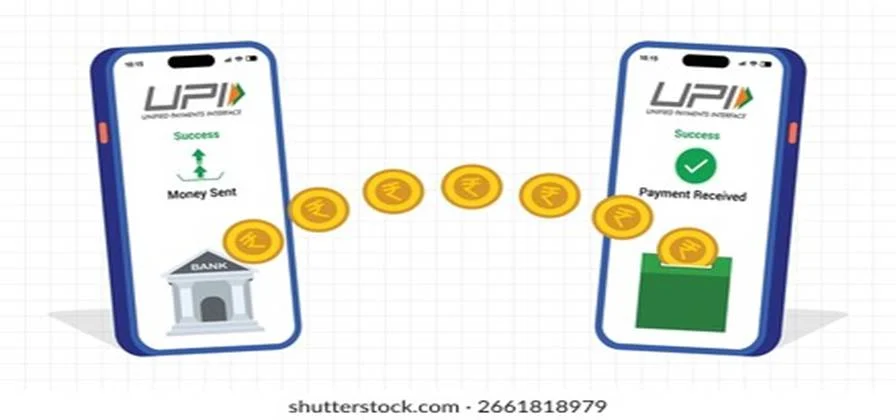
What is Actually Changing? (The Core Facts)
To understand this development accurately, it is essential to distinguish between the core transaction amount and the backend processing fees.
The Threshold & MDR: Starting October 15, person-to-merchant (P2M) UPI transactions crossing the ₹2,000 mark will attract a 0.4% MDR, subject to an overall cap of ₹300.The Economics Time
Where the 18% GST Applies: The GST is not levied on the UPI payment itself or the transferred money. Instead, the 18% GST applies strictly to the MDR service charge billed by banks and payment aggregators to the merchant for payment processing and settlement services.
Concessional Categories: Specific high-frequency sectors—including railways, telecom services, insurance, and fuel—will see a flat concessional MDR rate of ₹5 for transactions above ₹2,000. tally solution
Why the Shift? Analyzing the Growth of High-Value UPI
India’s digital economy has matured significantly, shifting from micro-transactions to a substantial volume of high-value commercial purchases. Industry data reflects this structural shift clearly: the share of P2M UPI transactions above ₹2,000 climbed from 15.1% in FY23 to 20.1% by the June quarter of FY27. The Economics Time
Tax experts and financial analysts point out that maintaining robust digital infrastructure, bolstering cybersecurity, and expanding payment gateways require structural financing. Industry projections estimate that this new framework could generate anywhere between ₹3,500 to ₹5,000+ crore annually in gross GST collections, serving as a revenue stream to support scaling payment networks. The Economics Time
Relief for Businesses: The Role of Input Tax Credit (ITC)
For registered commercial enterprises, the introduction of GST on MDR does not necessarily translate into a dead-end financial loss.

Neutralizing the Impact via ITC: Tax professionals emphasize that GST-registered businesses absorbing these MDR fees can claim Input Tax Credit (ITC) on the tax paid. Provided banks issue proper tax invoices or itemized statements reflecting these charges separately, merchants can utilize ITC to offset their overall output GST liabilities. The Economics Time
Small Vendors Protected: Transactions under ₹2,000 and small, unregistered grassroots retailers remain insulated, ensuring that day-to-day retail micro-payments stay streamlined and frictionless. Business Standards
The Exception: Businesses dealing exclusively in goods and services exempt from GST will not be able to claim ITC, meaning they will ultimately bear the direct cost of the GST levied on the MDR. The Economics Times
Summary: What It Means Moving Forward
The introduction of an 18% GST on the MDR for high-value UPI transactions represents a calculated regulatory pivot. It establishes a sustainable financial model to support India’s exponential digital transaction volume while shielding everyday consumers and small-scale vendors.
For mid-to-large scale businesses, adjusting compliance workflows to seamlessly capture and claim Input Tax Credit on payment gateway charges will be the key to neutralizing any added financial friction.
Key Takeaways at a Glance
| Feature | Details |
| Trigger Threshold | P2M UPI transactions above ₹2,000 |
| MDR Charge | 0.4% (subject to a cap of ₹300; flat ₹5 for select sectors like fuel/railways) |
| GST Implication | 18% GST applies only to the MDR service fee, not the transaction amount |
| Merchant Relief | Eligible businesses can claim Input Tax Credit (ITC) to offset the tax |